
Author Recent Posts Zamran Mengal Latest posts by Zamran Mengal (see all) Do Pakistan’s Cyber laws address today’s Misinformation crisis? – December 24, 2025 Pakistan Afghanistan tension through the lens of international law – December 11, 2025
Misinformation involves prioritising fiction over factual information. Misinformation is a distant cousin of rumour, gossip, and word of mouth, which have been used since the birth of earth to cause harm, distrust and division. As time has evolved, a new species has been discovered: misinformation. which is used as a mechanism to cause unrest and make people vulnerable and, moreover, used by states and terrorist outfits to attack the conscience of people. Does misinformation result in countries being dysfunctional?
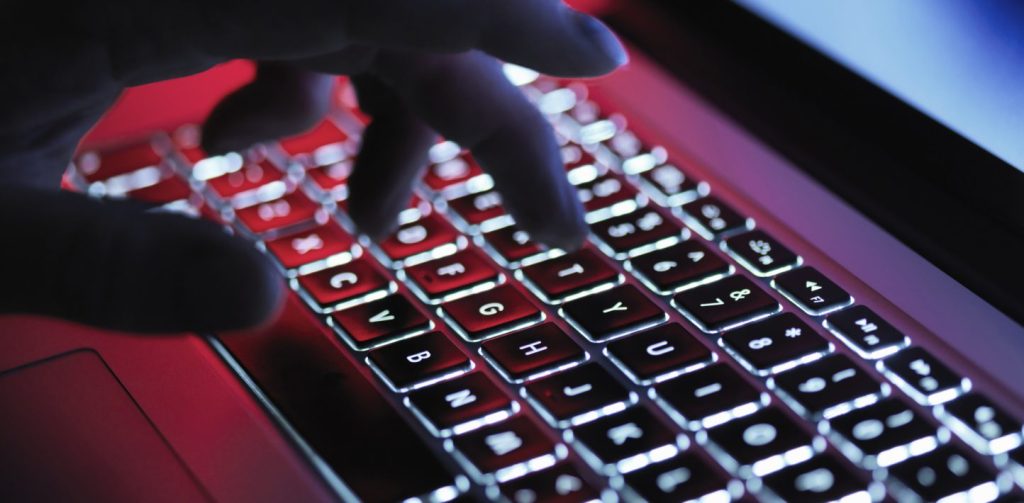
Incorrect information is used as a tool for malicious purposes to cause harm to an individual and is the reason for crisis in a nation. In Pakistan, disinformation, misinformation, and malinformation, together with the growth of hate speech and propaganda, are inciting social division and creating mistrust in public institutions. Misinformation is a serious threat to our country and its national security. The main cause for misinformation, or its originating point, and the medium through which it is spread is the internet. The internet is a tool of the 21st century, which is a basic need nowadays. Moreover, it is considered a basic resource for the developed countries, and it is a compulsory requirement for developing countries to attain it, but since everything comes with its pros along with cons, so is the situation with the internet. Where few individuals use it for personal gain, nowadays it is used by countries and terrorist outfits to spread their propaganda.
In the recent India–Pakistan war, the Indian army created AI-generated content to incite unrest in Pakistan by disseminating fake news. Donald Trump popularised the term “fake news,” also known as “misinformation.” To combat this situation, countries around the globe have introduced laws related to the spreading of fake news or misinformation, as in Pakistan. In Pakistan cyber laws are governed by the Prevention of Electronic Crime Act (PECA) 2016. It addresses cyberharassment, defamation, unauthorised access, and hate speech. Although PECA missed other related issues to address, further amendments were made in 2025. This amendment introduced stricter regulations and punishments for social media usage. The laws enforced regarding misinformation in Pakistan are through the Federal Investigation Agency (FIA).
The misinformation crisis is pollution, which is causing harmful effects, like other pollutants, to our nation, and since we are going through a misinformation crisis, we require a strong approach to combat it. According to UNDP information pollution is introduced as a terminology, which is causing effects on the citizens’ capacity to make informed decisions. In Pakistan the misinformation crisis is leading masses to believe in claims that are spread for propaganda and is impacting the evaluation and support of policies. One of the strongest effects of misinformation is that it leads voters to favour policies which are against the general public’s own interest, for example, in the 2016 USA election and, secondly, the Brexit vote in the United Kingdom. Moreover, it was reported that the top 20 fake election news stories generated more engagement on Facebook than the 20 top election stories from 19 major news outlets combined. The situation is no different in Pakistan, where controversial stories and news from social media are used as pivot points to cause chaos which favours the enemy states’ propaganda.
Misinformation is a major contributor to political polarisation in Pakistan, as misinformation is creating further division among political parties and making the situation worse for the general population. Misinformation is spreading like the roots of a banyan tree in Pakistan, which is affecting different areas or horizons of our nation. As during Covid-19 misinformation was spreading, its roots around science policymaking, which is a sensitive area as it has a drastic effect on the public’s understanding of healthcare policies. During covid it was considered an epicentre of misinformation, as it affected people’s beliefs, intentions and behaviour towards combating this deadly virus, as it was witnessed that people started to remove masks and call covid a narrative built by developed countries, and in some scenarios people used antiseptics orally to stop the virus, but it eventually resulted in death. Moreover, people avoided vaccines, making them vulnerable to the virus.
The reason for misinformation pollution in Pakistan is due to the low digital literacy rate, where people don’t verify news and build narratives upon that fake news. The use of AI is a beneficial thing, but it can be used to disrupt a nation, as Pakistan is facing a misinformation crisis where AI is a major contributor used by enemy states or terrorist outfits to threaten Pakistan economically and, moreover, its national security. It has been used as a major element of hybrid warfare, but to combat it, Pakistan needs to make its weakened media institutions stronger so people could rely more on media institutions than on social media news that is not from a verified source. And furthermore, to help the layperson determine if the news article, image, or video is authentic or not, we need to have access to a website where news could be checked by pasting the link on that website. Lastly, Pakistan needs to make the institutions that execute laws related to misinformation effective, efficient, and incorruptible in naure.

- Do Pakistan’s Cyber laws address today’s Misinformation crisis? - December 24, 2025
- Pakistan Afghanistan tension through the lens of international law - December 11, 2025










Leave a Comment
Your email address will not be published. Required fields are marked with *