

Author Recent Posts Zahid Hussain Latest posts by Zahid Hussain (see all) An International Law Analysis of the U.S. Intervention in Venezuela – January 23, 2026 Misinformation in the Digital Age: Assessing Pakistan’s Current Laws and Gaps (Zahid) – January 13, 2026 Is It Time for Pakistan to Consider a New Regional Counterterrorism Framework? –
Afghanistan’s frontier remains one of the most fragile regions in South-Asia, defined by porous borders, militant safe heavens, and overlapping spheres of influence. Since the Taliban’s return to power in 2021, instability along the Afghan frontier has continued to spill into neighboring countries, forcing Pakistan, Iran, and China to face both security and economic challenges. All these three powers have become the primary regional players with the capacity and the incentive to influence Afghanistan’s borderlands. The key question is whether they can collectively bring about stability in the region. The answer, based on current realities, is that partial stabilization is possible, but deep-rooted challenges make full peace a distant reality.
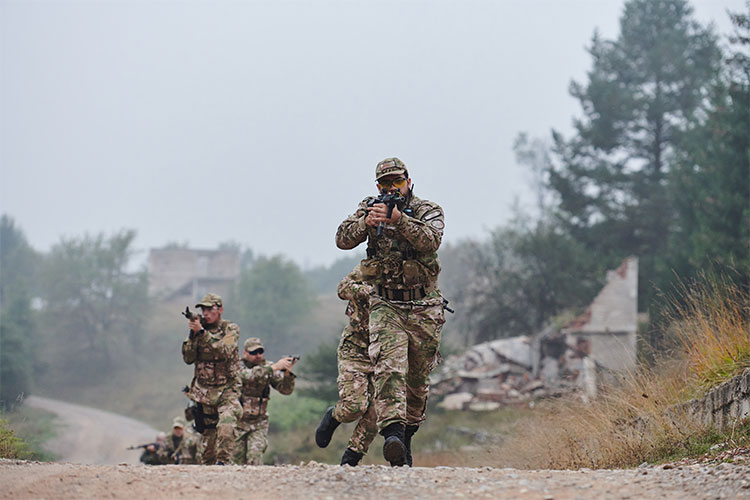
Pakistan’s western frontier security is essential for peace and stability. The resurgence of the Tehrik-e-Taliban Pakistan (TTP) and Balochistan Liberation Army (BLA) has led to deadly attacks in Pakistan’s Khyber Pakhtunkhwa and Balochistan provinces. Islamabad argues that the Taliban have failed to prevent these militants from using Afghan soil as a base. The resulting mistrust has repeatedly erupted into border clashes, particularly along the Durand Line. Iran, meanwhile, faces its own frontier pressures. It hosts millions of Afghan refugees and faces smuggling, narcotics trafficking, and periodic armed confrontations along its eastern border. Tehran’s main interest lies in preventing further refugee inflows, stabilizing its frontier provinces, and maintaining influence within Afghanistan, particularly among Shia communities.
China’s stake is primarily strategic and economic. As the driving force behind the Belt and Road Initiative (BRI) and the China–Pakistan Economic Corridor (CPEC), Beijing views Afghanistan’s stability as essential for regional connectivity. A destabilized Afghanistan threatens Chinese infrastructure projects in Pakistan and Central Asia, while any spillover of extremism could unsettle its western Xinjiang province. Despite their differences, all three countries agree that a stable Afghanistan and by extension, a stable frontier is essential to their long-term interests.
While the security dimension is pushing this discourse, economic connectivity is the real objective behind recent diplomatic engagement. It is clear that Afghanistan to its neighbors through trade and transit could transform the frontier from a line of conflict into a corridor of opportunity. China has repeatedly signaled its willingness to extend CPEC into Afghanistan and Iran, creating a regional network that links Central Asia with the Arabian Sea. This could integrate Afghanistan into regional supply chains, providing revenue and jobs to frontier communities that have long depended on smuggling and informal trade.
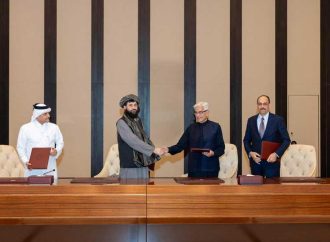
For Pakistan, such integration would not only enhance economic ties but also reduce terrorism by giving both Islamabad and Kabul a common interest in keeping borders open. Meanwhile, Iran has sought to link its Chabahar Port to Afghan trade routes, balancing China’s Gwadar-centered projects and ensuring its own relevance in regional logistics. Economic logic thus underpins diplomatic moves. In September 2025, foreign ministers from China, Iran, Pakistan, and Russia issued a joint statement affirming support for Afghan stability and greater regional cooperation on security and trade. While largely symbolic, this coordination reflects an emerging consensus that stability must come through connectivity rather than isolation.
Pakistan’s concerns are primarily security-oriented, focusing on militancy and cross-border infiltration. Iran’s focus is humanitarian and economic, emphasizing refugee management and narcotics control. China, for its part, prioritizes investment security and non-interference in Afghan politics. These differing lenses make sustained coordination difficult. Moreover, Afghanistan’s internal governance remains fragile. The Taliban’s administration faces international isolation, economic collapse, and internal factionalism. Many border regions are still under the influence of local militias or insurgent groups, making it difficult to implement consistent security or trade policies. Weak institutions also hinder the enforcement of cross-border agreements.
The recent escalation of border violence highlights how quickly progress can unravel. In late 2025, Pakistan and Afghanistan experienced their most serious clashes in years, leading to temporary border closures at Torkham and Chaman crossings. Trade halted, food prices in Pakistan soared, and both sides exchanged accusations of aggression. Although a ceasefire was later welcomed by Iran and China, the confrontation exposed how fragile frontier management remains. Similarly, external geopolitical competition complicates regional cooperation. India’s growing diplomatic engagement with Kabul is viewed with suspicion in Islamabad. The United States and European partners remain critical of the Taliban’s governance but continue to provide humanitarian aid, shaping Kabul’s external dependencies. Meanwhile, Russia maintains security interests in northern Afghanistan, adding another layer of rivalry. This crowded strategic landscape limits how far Pakistan, Iran, and China can act in concert.
Looking closely at these realities a peaceful Afghan frontier is unlikely in the near term. However, managed stability reduction in major conflict combined with functional economic and diplomatic ties are achievable if the three powers act pragmatically. Enhanced border coordination through establishing joint patrols, intelligence-sharing mechanisms, and rapid-response teams to prevent small skirmishes from escalating. Formalization of trade through developing infrastructure and customs systems that make legal trade more profitable than smuggling, giving frontier communities a stake in peace. Inclusive diplomacy: Engaging the Taliban pragmatically while pressing for internal reforms that reduce militant safe havens. Economic incentives like expanding trilateral projects linking Iran’s Chabahar Port, Pakistan’s Gwadar Port, and Afghanistan’s trade corridors. Each of these steps would gradually shift the frontier’s character from a space of confrontation to one of cooperation.

- An International Law Analysis of the U.S. Intervention in Venezuela - January 23, 2026
- Misinformation in the Digital Age: Assessing Pakistan’s Current Laws and Gaps (Zahid) - January 13, 2026
- Is It Time for Pakistan to Consider a New Regional Counterterrorism Framework? - December 17, 2025


















Leave a Comment
Your email address will not be published. Required fields are marked with *