
Author Recent Posts Zahid Hussain Latest posts by Zahid Hussain (see all) Strategic Motives Behind Operation Ghazab lil Haq – March 31, 2026 Why NATO is not willing to join the U.S.- Israel-Iran war? – March 31, 2026 Strategic Recalibration in the U.S – Pakistan Relations – March 19, 2026
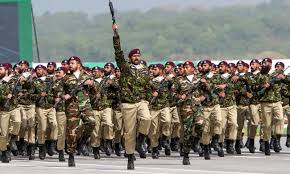
Article 243 of Pakistan’s 27th Constitutional Amendment, which specifies who is in charge of the nation’s military forces, brought about significant structural change. These revisions are far more than merely technical changes. They significantly alter the way Pakistani military command operates. Since these modifications represent one of the biggest changes in Pakistan’s military command structure, it is imperative to comprehend them. Prior to the modification, Article 243 gave the Federal Government ultimate command and control over the armed forces, with the President acting as their symbolic supreme commander. According to procedure, the highest-ranking military official was the Chairman Joint Chiefs of Staff Committee, or CJCSC.
Currently, 27th Amendment has modified this system by introducing a new command architecture at the top of Pakistan’s military. The most dramatic change comes from elevating the Chief of Army Staff to a dual function. The army chief will automatically assume the role of Chief of Defense Forces under the amended Article 243. This reform ends the job of CJCSC altogether and places the army chief at the summit of all three branches of the armed forces. The establishment of a new role to be known as Commander of National Strategic Command is one of the amendment’s main features. Pakistan’s nuclear and strategic weapons forces, which make up some of the most delicate aspects of national defense, will be under the leadership of this position.
Under the new rules, officers who attain these prestigious positions will hold their rank for life and retain all related privileges. They will remain in uniform indefinitely unless removed through a special parliamentary procedure. Even more significantly, they will enjoy a form of legal immunity typically afforded to the President of Pakistan, shielding them from prosecution for actions performed in their official capacity. Another noticeable change concerns the mechanism for appointing military chiefs. The President will continue to make these appointments, but only on the advice of the Prime Minister. The key difference is that the army chief automatically becomes the CDF, giving the Prime Minister less flexibility than before.
Additionally, the Prime Minister will appoint the Commander of National Strategic Command but must consider the CDF’s advice. Analysts argue that this arrangement may enhance efficiency but also increases the influence of the army chief in shaping Pakistan’s wider defense leadership. To ensure consistency with the new constitutional framework, the government has also approved amendments to the Army Act, the Navy Ordinance, and the Air Force Act. These changes align the service laws with the newly restructured military command under Article 243. Together, these adjustments represent a comprehensive reorganization of Pakistan’s defense architecture. The centralization of command is expected to produce faster decision-making and better coordination across military branches, especially during crises.
The new structure may also streamline the country’s nuclear command, as the strategic chain of command becomes more coherent and clearly defined. However, many critics argue that these benefits come at the cost of reducing civilian oversight. They warn that granting lifetime status and immunity to senior officer’s risks weakening transparency and undermining democratic control over the military. The amended Article 243 is also expected to reshape the internal functioning of Pakistan’s armed forces by streamlining decision making and centralizing operational authority. With the Chief of Defense Forces serving as the unified commander over all service branches, joint planning, inter-service coordination, and resource allocation will become more integrated. This reduces bureaucratic layering that previously existed between the services and the CJCSC. Operational directives, procurement priorities, and strategic doctrines will now flow from a single authority, potentially increasing coherence in both peacetime and wartime operations.
However, this consolidation also means that the strategic priorities of the army are traditionally the most dominant service could increasingly shape naval and air force planning, influencing everything from command hierarchies to the distribution of defense budgets. Supporters of the amendment promote it as a modernizing step, aligning Pakistan’s defense organization with global trends that emphasize unified commands and integrated operational frameworks. Ultimately, the 27th Amendment’s rewrite of Article 243 represents a decisive turning point cone that is likely to shape Pakistan’s political and military landscape for years to come.

- Strategic Motives Behind Operation Ghazab lil Haq - March 31, 2026
- Why NATO is not willing to join the U.S.- Israel-Iran war? - March 31, 2026
- Strategic Recalibration in the U.S – Pakistan Relations - March 19, 2026


















Leave a Comment
Your email address will not be published. Required fields are marked with *