Author Recent Posts Eshrat Fatima Latest posts by Eshrat Fatima (see all) Is Pakistan emerging as a new middle power? – June 24, 2026 Can Economics Bridge the Divide? Trade Relations under Modi’s India – June 16, 2026 Transit of Goods Order 2026: The Legal Road to Regional Integration – May 14, 2026
After the resurgence, the TTP instigates attacks on security personnel and targeted attacks, diversifying the pattern of mass killing. The Tehrik-e-Taliban Pakistan emerged in 2007, aimed to enforce Sharia in Pakistan, and is responsible for numerous suicide bombings, attacks on Schools, mosques, markets, and other institutions. However, this group was eradicated after the government of Pakistan launched several operations. Through the Operation Zarb-e-Azb launched in 2014, the Pakistan government reduced the influence of TTP significantly; however, this militant group reemerged notably in 2021 after the establishment of the Taliban government in Afghanistan and intensified attacks on security personnel, along with targeted civilian attacks. This raised the question: What new terrorism patterns reveal after TTP reemerged?
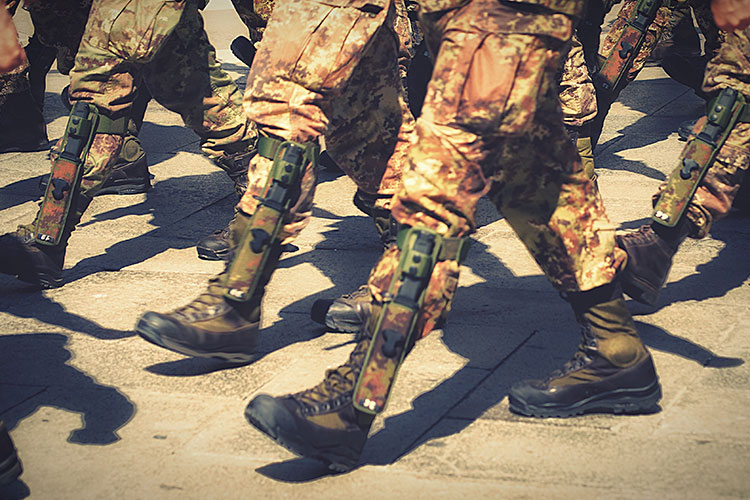
Initially, after reemergence in 2021, the Tehrik-e-Taliban Pakistan intensified attacks on security personnel. Numerous attacks were initiated on security personnel, military installations, military bases, and checkpoints, particularly in Khyber Pakhtunkhwa province. In 2023, a suicide bomber in Jani Khel, Bannu, targeted the police, which caused the death of nine soldiers. Another incident occurred in Bara where two suicide bombers entered and targeted the police compound, causing the deaths of four officers and nine soldiers were wounded. These attacks highlight the surge of militant attacks on security personnel apart from mass killing, as before reemergence, the TTP mainly attacked on civilian population.
The targeted attacks on civilians, however, increased after 2023. These attacks rose up to 11 times between 2023 and 2025, especially targeting tribal elders, polio workers, civil servants, and off-duty police. The Tehrik-e-Taliban Pakistan shifts its pattern and focuses on creating the narrative that they are against the government only. The targeted attacks on tribal elders, polio workers, and off-duty police show that TTP demonstrates to the local people that they oppose the government by attacking security personnel and individuals affiliated with the government. Because after the tragic incident at Army Public School Peshawar, where more than a hundred students died, public support for military operations against militant groups in tribal areas grew, leading to Operation Zarb-e-Azb against TTP.
This time, Tehrik-e-Taliban Pakistan trying to claim of local rights. TTP is positioning itself as the protector of the rights of the people, as after the merging of the federally administered Tribal Areas (FATA) in Khyber Pakhtunkhwa in 2018. The TTP is using these growing sentiments against the government and tring to persuade people’s minds and turn locals against the government. For this purpose, they are supporting the Pushtun Tahaffuz Movement to show that they are protectors of the Pashtun ethnicity, though the Pashtun Tahaffuz Movement was banned in October 2024 due to security reasons.
TTP diversifies geographically across Pakistan. Tehrik-e-Taliban Pakistan has restored a strong hold in the Waziristan region of Khyber Pakhtunkhwa and is now moving forward towards other provinces. The TTP was made and flourished in the KP region, and was involved in suicide bombing, target killing, and attacks on the army before the operations launched against them. However, after reemerging in KP is now slowly moving to the Balochistan, Punjab, and Sindh provinces. As in 2024, nineteen attacks occurred in Punjab, and five in Sindh, highlighting the emergence of Tehrik-e-Taliban Pakistan in other provinces of Pakistan. The spread of the militant group TTP across Pakistan demonstrates a security issue.
The rise of the Taliban government in Afghanistan strengthened the operational capability of the Tehrik-e-Taliban Pakistan. After the Taliban came to power in 2021, a resurgence of this militant group in Pakistan increased because the Taliban government provided a safe haven to these groups. Cross-border movement has become easy and possible. That’s why, after the Taliban government came into power, the TTP opened new training camps in border areas, and cross-border terrorist activities increased. The TTP attacked security personnel and hide inside the Afghan region. Also, the Afghanistan government provides materialistic help to the TTP; however, the Afghanistan government refuses the claim that they provide material help to the TTP. Pakistan initiated several talks with Afghanistan to solve cross-border terrorist activities by involving third-party states; however, the talks failed because the Afghan government has ties with TTP and refuses to act against them.
Moving forward, the TTP reemerged more strategic, organized, and geographically diverse. The resurgence of Tehrik-e-Taliban Pakistan has increased security issues across Pakistan. The sanctioned group, which was previously eradicated after the 2014 Operation Zarb-e-Azb, has, however, reemerged, especially after the Taliban came into power. The specific attacks on military personnel and targeted civilian attacks raise security concerns. Pakistan needs to focus on prospering the newly merged areas of KP through socio-economic developments, administrative justice, and providing opportunities to fill the gap that the TTP seeks to fill. Along with this, Pakistan needs to pressurize the Taliban Government to stop supporting the TTP to limit the reemergence of the TTP and to maintain stability across the country.

- Is Pakistan emerging as a new middle power? - June 24, 2026
- Can Economics Bridge the Divide? Trade Relations under Modi’s India - June 16, 2026
- Transit of Goods Order 2026: The Legal Road to Regional Integration - May 14, 2026