Author Recent Posts Muammad Abubakar Nazar Latest posts by Muammad Abubakar Nazar (see all) May 2025 conflict: The role of AI in Military Warfare – March 2, 2026 Cross-Border Millitancy and Border Management – September 9, 2025 U.S tariff relief and underlying complexities – August 28, 2025
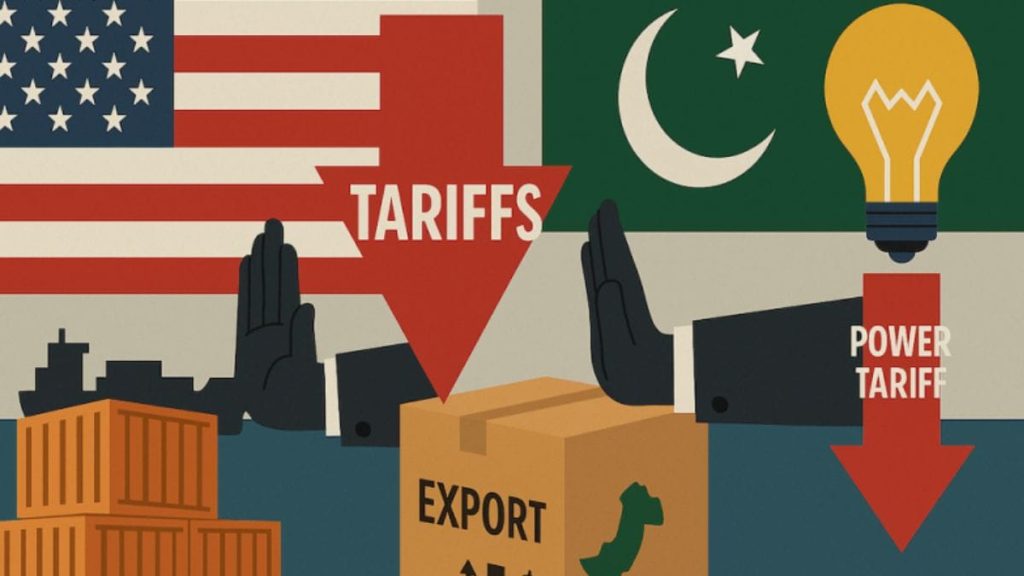
The tariff deal with U.S seems beneficial for Pakistan but it is necessary to look at the possible complexities which lie in the backdrop of this agreement. At the start of August, U.S and Pakistan signed an agreement to develop oil deposits in Pakistan. The officials in Pakistan also claimed to have achieved a tariff deal, according to which the rate would be lowered from 29% to 15-20%. The Prime Minister of Pakistan called it a “landmark” deal and applauded the efforts of President Trump in fostering bilateral relations. These agreements are very important but the local industries which will be impacted must also be given an analysis, while looking at the stability and longevity of this great deal.
Pakistan has achieved a strategic win over its neighbor and it may have overlooked the economic factor. Analysts have warned that this partnership is dependent more upon Trump’s varying mindset. An example of which is that, India is currently facing 25% tariff rate and is also being penalized for doing trade with Russia and buying oil from it. It was not very long ago, but the January of this very year, that both India and U.S were in very stable diplomatic ties. The Indian Prime Minister Modi went on to call AI as “America and India”, expressing hope and joy for partnership among two countries. All of that has turned upside down as Trump has literally said that India and Russia can take their “dead economies down together”. In all this scenario, the chances of durability of this deal between Pakistan and the US should also not be exaggerated. The government and experts of Pakistan need to take this all in a gradual manner while keeping the diplomatic links active.
The “landmark” tariff deal with the U.S is being praised, which is very well, but the local manufacturing costs still remain sore. The tariff deal means that Pakistan enhances its exports, which can be done only when local manufacturers produce enough. All of this happens when the costs are decreased to ease the industrialists. Business Recorder notes that high production costs still hamper production, which is the main beneficiary of the tariff deal. This might go on to play “Jekyll and Hyde” for these local markets, where the tariff relief proves good but high costs as stagnant. There is also need to ease the markets, especially small producers, for the entry of U.S firms in order to prevent flooding of competition. Experts have also warned that without proper structural reforms the desired developmental outcomes will remain in the backdrop.
The background factors which led to the finalization of this deal are also to be taken in consideration. India and Pakistan both hired lobbyists, close to Trump, in order to foster their relations and increase the chances of possible deals. India went on with Jason Miler, also known as Trump’s chief spokesperson while Pakistan hired Keith Schiller who is Trump’s former bodyguard, at a relatively lower price. The lobbyist for Pakistan seems to have succeded but the deal based on this does not necessarily serve national interest. The chances of this deal getting a different turn in future can also not, hence, be ruled out. The reason behind this is the growing role of informal diplomacy, which leads to mostly inconclusive and less formalized results.
The Reco Diq copper-gold project has also been used as a bargaining chip in making of this deal. This will give U.S the access to important minerals in the country and this might not be very acceptable to the locals. This case can still not be very concerning, if it proves to be beneficial and does not disrupt country’s national interest. The factor involving non-tariff condition is also to be considered because this can go on to affect the domestic policies or even laws. These non-tariff conditions involve the protection of investor, settling the disputes and also aligning regulations.
This deal is indeed a diplomatic, strategic and economic win for Pakistan, especially when its adversary neighbor is being penalized. The need, however, is to take most out of this deal and this would involve a number of policy implications. Pakistan must ensure transparency and credibility to not only take in trust the investors but also mainly the manufacturers. The varying political governments must also not adopt alternative policies as that stops the growth as well as brings it down to deficit. Pakistan should also look for an all-round approach and not only focus on the deals with the U.S but other powers.

- May 2025 conflict: The role of AI in Military Warfare - March 2, 2026
- Cross-Border Millitancy and Border Management - September 9, 2025
- U.S tariff relief and underlying complexities - August 28, 2025