Author Recent Posts Faiza Eiman Malik Latest posts by Faiza Eiman Malik (see all) Illegal Afghan Refugees and the Security Threat to Pakistan – September 19, 2025 Pakistan’s Disaster Preparedness and Deferred Resilience – September 10, 2025 Pakistan-US Oil Deal Redefines Diplomatic Relations – September 3, 2025
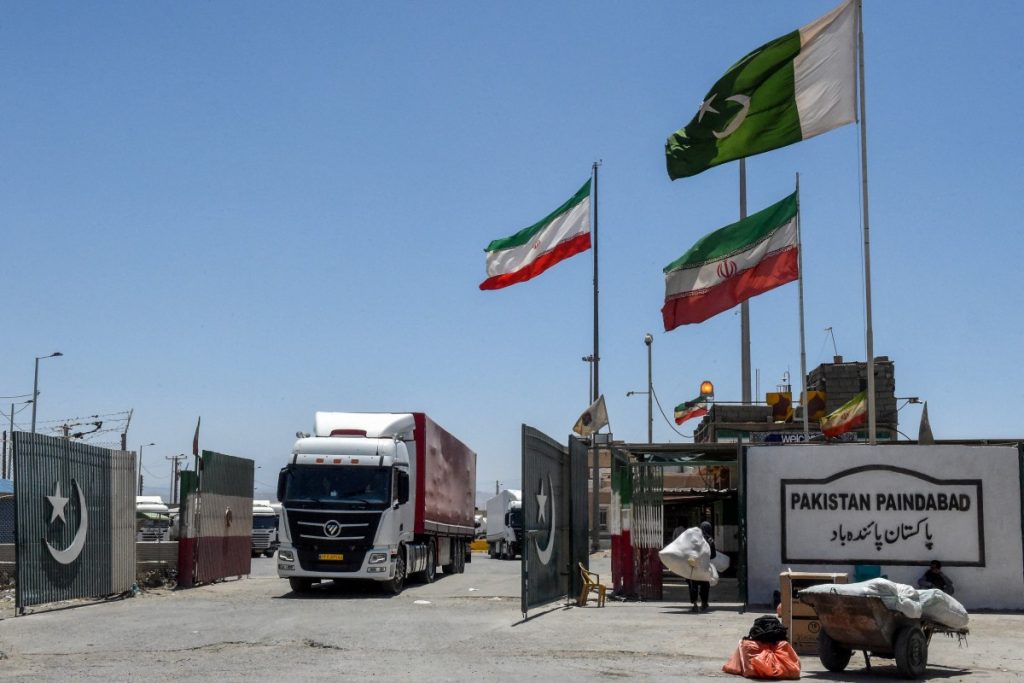
A 12-day Iran-Israel conflict has ended but highlighted a need towards more secure maritime trade routes for Pakistan. Pakistan must navigate on its own through regional and economic instability. It is among the most vulnerable to suffer the consequences of this conflict, given the 909km (562 mile) long border they share. It has heightened sensitivity towards Pakistan’s maritime infrastructure and energy policy due to growing regional instability. There are already existing EU sanctions on Iran, thereby also placing a bar on Iran-Pakistan pipeline agreement, Pakistan’s trade competitiveness took a hit. This raises a clear question that Can Pakistan bear the tremors of the Iran-Israel conflict utilizing it as a catalyst to bring reforms or will it have to face the ramifications of a conflict it never started?
Iran-Israel conflict has visibly put stress on Pakistan to reassess and possibly reduce its dependency on maritime trade. Geographical factors are often overlooked yet they play a key role in how international affairs are shaped. Pakistan’s geostrategic position has given it the status of focal point for the land-locked states. This geographical privilege is undermined by dependence on the Strait of Hormuz for oil trade. Approximately, Pakistan’s 90% of trade volume is transported through sea routes. This shows Pakistan’s reliance on maritime economy and importance of regional stability. Moreover, Pakistan has been reluctant towards Iran-Pakistan Gas Pipeline as the compliance with the international sanctions is crucial for financial support from IMF. This land-based project hasn’t been realized until now, so Pakistan is still at the same position in terms of dependence on its maritime trade in oil and gas. Pakistan’s maritime trade includes fisheries, port revenues, shipbreaking etc., however, Oil imports have been the ones most exposed to the geopolitical risks.
Even before the Iran-Israel conflict, the Pakistan and Iran were aiming to expand their bilateral trade. Despite the continued global sanctions Iran continues to trade essential for its economic sustenance. The focus is shifted towards the non-traditional method, often outside the scope of officially recorded commerce. It is reported that Pakistan has been importing massive amounts of oil from Iran. However, this import has also caused loss of revenue as cheap Iranian oil is being preferred over domestic ones. Also, Pakistan imported 9.387 million tonnes of crude oil to meet domestic demands in FY25, most of which is imported via the strait of Hormuz, a chokepoint for maritime trade.
US sanctions have limited the Iran-Pakistan trade, but the issue here is Iran’s threat strategy or policy i.e. closure of strait of Hormuz, every time to protect its sovereignty. It not only effects Pakistan’s maritime trade with Iran but also with the rest of the world, as 20 percent of the world oil supply passes through this strait. This clearly shows global dependency on strait of Hormuz including China and European states. Major oil importers to Pakistan are Saudi Arabia and UAE via strait of Hormuz, as it connects directly with the Arabian Sea. Iran-Israel initial strikes resulted in 7-14% rise in oil prices. Any such rise does not only make Pakistan to suffer the consequences, but it will ultimately lead to Global Inflation. According to some analysts Gwadar may serve as a better alternative and become strategically valuable. This might be attractive to the states like China in terms of CPEC or Central Asian states but not for the oil-exporting countries as these have been directly connected to the strait. The regional instability might also invite decreased investment in this region of which US reduced import from Persian Gulf is a proof.
Amid world’s realignment after Iran-Israel conflict, Gulf states may find suitable alternatives and may invest more in these like UAE’s Fujairah pipeline, Saudi Aramco’s East-West pipeline but the Pakistan’s maritime policy is not ready for these aftershocks. Pakistan is facing diplomatic constraints to carry out maritime trade with Iran, and economically and resources wise is not strong enough to sustain its own oil production. It depends heavily on oil imports. Also, continued EU sanctions maintain the status quo of potential trade between Iran and Pakistan, same as before the conflict but it might become even less than before. That’s also because Pakistan is more inclined towards diplomatic relations with America, as by nominating US President Donald Trump for Noble Peace Prize.
Keeping these obstructions in view Pakistan needs to enhance its maritime trade exchange to control the unwanted damage it might have to suffer in future. Pakistan by increasing investment in Gwadar can significantly strengthen its maritime economy due to the interest of major powers like China. That’s because they will be able to use it as their trade route and connect with Middle East especially Arabian Gulf via Arabian Sea. Moreover, Pakistan should reduce its dependency on oil. Even though it has increased its investment in Hydropower along with the investment of $1.15billion from World Bank, but a gap still exists for Pakistan to increase investment in other renewable energy resources especially solar. The goal is to make our trade routes more secure and less vulnerable. This can be done through efficient multilateral diplomacy which can not only strengthen regional ties but ultimately lead to insulation from external shocks. The Iran-Israel conflict has unveiled Pakistan’s fragile maritime trade networks and shifted the focus towards need of planned projects to overcome these foreseeable economic crises. This conflict has happened beyond Pakistan’s border but it’s an opportunity to recalibrate its networks and shape its future.

- Illegal Afghan Refugees and the Security Threat to Pakistan - September 19, 2025
- Pakistan’s Disaster Preparedness and Deferred Resilience - September 10, 2025
- Pakistan-US Oil Deal Redefines Diplomatic Relations - September 3, 2025